

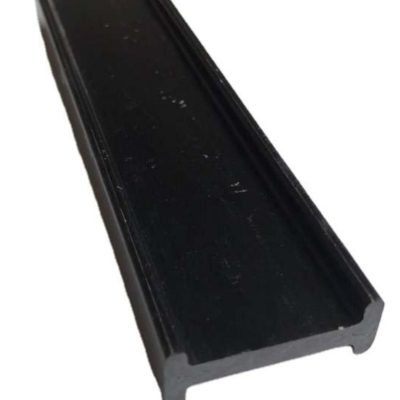
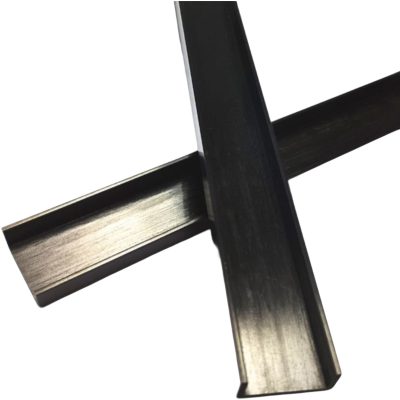
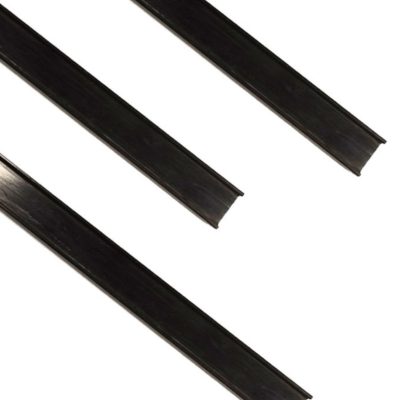
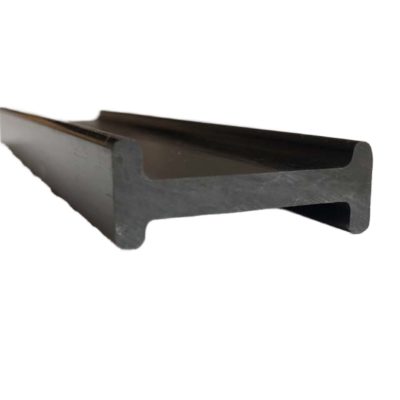
Carbon Fiber I-Beam
Product Description
Think of a steel I-beam as the strong, grumpy giant—loud, heavy, and stubborn. Now think of a carbon fiber I-beam as the quiet friend who shows up, says “I got this,” and lifts twice the weight without a single groan.
It’s so light that one person can carry it across the job site. No crane. No sweat. But don’t let that fool you—under pressure, it’s tougher than steel. It doesn’t rust. It doesn’t get tired. Rain, sun, salt spray, chemical fumes… it takes whatever the world throws at it and stays steady.
For engineers, that means fewer late nights reworking designs. You can build simpler, safer, and with a lot more confidence. For the people who live, work, or walk on what you build, it means something even better: invisible safety. Thinner columns. Wider views. A structure that doesn’t have to scream to be strong.
The carbon fiber I-beam isn’t here to replace the old guard. It’s here to prove one thing: the strongest things in life don’t have to be the heaviest.
| Specifications | Typical Value / Description |
|---|---|
| Material | High-performance aerospace-grade carbon fiber composite (with epoxy resin matrix) |
| Weight | Ultra-light (e.g., approx. 0.5 kg – 2.5 kg per linear meter, depending on cross-section) |
| Color | Classic matte black / Customizable surface coating or marking |
| Length | Customizable (common range: 0.5 m – 12 m; longer splicing solutions available) |
| Web Height (Section Depth) | Typical range: 30 mm – 200 mm (customized based on load requirements) |
| Flange Width | Typical range: 20 mm – 100 mm (matching section depth) |
| Load Capacity | 3–5 times stronger than steel at the same weight; e.g., 50×50 mm I-beam can safely support 500+ kg at 1 m span (subject to design validation) |
| Environmental Resistance | Excellent: resistant to water, UV, most chemicals (acids, alkalis, salt spray), no rust, fatigue resistance far superior to metals |
| Typical Applications | Bridge reinforcement, aerospace structural components, high-end robotic arms, lightweight building frames, competitive sports equipment, marine engineering, wind turbine blade beams, etc. |
Note: The values listed in the table are approximate and may vary depending on the specific product model and manufacturer. It is recommended to consult the product datasheet for accurate and detailed specifications.
Industry Trends
Trend 1: No longer just for space shuttles and race cars
Not long ago, carbon fiber I-beams lived only in F1 cars, fighter jets, and aerospace labs. Now? They’re quietly showing up in bridge reinforcements, building retrofits, and even residential structures. Prices are dropping. Applications are growing. Think of it like aluminum half a century ago — expensive at first, then suddenly everywhere.
Trend 2: Construction and infrastructure are falling in love with “light”
Engineers are realizing a simple truth: heavier structures mean more expensive foundations and harder labor. Carbon fiber I-beams flip that equation. You can lift a main beam with one finger — and it still carries a truck’s weight. This contrast is changing people’s perceptions of architecture.
Trend 3: Durability becomes the new peace of mind
Steel rusts. Concrete cracks. Carbon fiber? It almost ignores time and weather. In coastal areas, chemical plants, or humid tunnels, it’s like that reliable coworker who never calls in sick — still working after decades. More projects are now looking at lifetime cost, not just upfront price. Suddenly, carbon fiber isn’t “expensive” — it’s “smart.”
Part 2: The Wider Carbon Fiber Industry — Three Human-Sized Shifts
Trend 4: Recycling and sustainability are no longer buzzwords
Carbon fiber had one real weakness: hard to recycle once cured. But the industry is fixing that — seriously. Pyrolysis, microwave degradation, reversible resins. These aren’t just lab papers anymore; they’re running on factory floors. “Use once and throw away” is becoming “use, recover, and reuse.” That’s genuinely good news for the planet.
Trend 5: Automation kills the “handmade luxury” price tag
Carbon fiber used to be slow and expensive — hand layup, autoclaves, like making fine art. Now? Automated fiber placement, continuous pultrusion, fast-cure resins. Higher output, lower cost. That means small and medium companies can afford it. And eventually, so can more ordinary people.
Trend 6: Hybrid materials — stop being a purist
The industry is learning a humble lesson: you don’t have to use 100% carbon fiber everywhere. Mix it with steel, aluminum, wood, or even foam cores. For example, carbon fiber flanges + a lightweight core web. Cheaper, but still strong. This “practical” mindset is turning carbon fiber from a showoff material into an engineering common sense.
Application
Let’s skip the bullet-point list of industries. Instead, let’s walk into the real places where this quiet, lightweight beam is actually helping someone solve a real problem.
1. The Old Bridge’s “Silent Cane”
A 60-year-old bridge is tired. Steel is rusted. Concrete is cracked. Tearing it down costs millions and shuts down a town for a year. Enter the carbon fiber I-beam — like a gentle doctor making a house call. You bond it alongside the old beam, no big demolition, no long closure. Suddenly the bridge can handle trucks again. Nobody underneath even notices the slim black beam doing all the heavy lifting.
2. The Beach House’s “Rust-Proof Backbone”
By the ocean, steel lasts maybe five years before salt eats it alive. Carbon fiber I-beams? They stand there like a calm lifeguard — sea breeze, salt spray, fog — none of it matters. No rust. No repainting every few years. The building owner sleeps better. The maintenance crew climbs fewer scaffolds.
3. The Post-Earthquake “Quick Crutch”
After a quake, some buildings are damaged but not collapsed. They need emergency support — fast. Steel beams are heavy; getting them up stairs takes hours. Carbon fiber I-beams? Two workers carry one up like a longboard. Lightweight means speed when speed saves lives.
4. The Museum’s “Invisible Hanger”
Old buildings turned into art museums — you can’t drill heavy steel into historic ceilings. Carbon fiber I-beams become the hidden skeleton for hanging exhibits. Strong enough to hold a sculpture, slim enough to disappear. Visitors see only the art floating in midair. Nobody sees the beam quietly doing its job above the ceiling.
5. The Race Car’s “Last Line of Defense”
Race cars are the classic example, but here’s the human part: when a car flips at 200 km/h, the roll cage made of carbon fiber I-beams takes the hit so the driver doesn’t have to. It cracks, crushes, and sacrifices itself — like a stunt double. The driver walks away. That’s the most human reason to use it.
6. The Factory’s “Never-Tired Arm”
An automated robotic arm picks and places parts 10,000 times a shift. A steel arm gets tired — well, not tired, but heavy. Half its energy just moves its own weight. Swap in a carbon fiber I-beam for the main structure. The robot moves faster, uses less electricity, and never develops metal fatigue. It’s still going when the shift supervisor goes home.
7. Your Next Bike or Wheelchair
High-end bicycles. Lightweight wheelchairs. The main frame is often a carbon fiber I-beam in disguise. The person climbing a hill sweats less. The person in a wheelchair pushes easier. This isn’t racing tech for pros. It’s everyday freedom for real people.
Advantages
1. So light one person can carry it — for the worker’s back
A steel beam of the same strength needs four people and a crane. A carbon fiber I-beam? One person, one hand, one easy lift. Fewer strained backs, fewer crane rentals, faster installs. That’s not a spec. That’s a favor to every worker on site.
2. Never rusts, ignores moisture — for the maintenance crew’s legs
By the sea or in a chemical plant, steel needs scraping and repainting every few years. That means scaffolds, confined spaces, paint fumes. Carbon fiber I-beams? Install once, forget forever. Fewer ladders climbed. Less time breathing solvents. It gives people their time back.
3. No metal fatigue — for peace of mind
Metal gets tired. Vibration after vibration, one day it just snaps — without warning. Carbon fiber almost never fatigues. Elevator frames. Robot arms. Pedestrian bridges. It doesn’t have a midlife crisis at 3 AM. Engineers sleep better. Users walk taller.
4. Stronger than steel pound for pound — for the designer’s sanity
To hold the same load, a steel beam has to be thick, heavy, and need lots of columns. A carbon fiber I-beam can be slender, elegant, and span farther. Fewer columns mean more open space. Architects cry less. Rooms feel bigger. Everyone wins.
5. Chemical-resistant — for the lungs inside factories
In plating shops, chemical plants, wastewater treatment — acid fumes eat steel alive. Carbon fiber I-beams? They wear an invisible gas mask. Workers don’t have to weld reinforcements in stinging air. It protects real lungs and real eyes.
6. Highly customizable — for the “non-standard” headache
Some structures are weird shapes, tight spaces, odd angles. Steel has standard sizes — you make do. Carbon fiber can be pultruded into almost any cross-section. Like a tailor making a bespoke suit. No cutting, no grinding, no “good enough.” Just fits.
7. Electromagnetically transparent — for clear signals
In MRI rooms, radar stations, near 5G antennas, metal beams mess with signals. Carbon fiber I-beams carry the load without blocking the waves. Doctors see clearer images. Calls don’t drop. It lets technologies be neighbors instead of enemies.
Customize the color
We can match any color based on standard color codes or provided samples.


Comparison with Traditional Materials
| Comparison | Carbon Fiber I-Beam | Steel Beam | Aluminum Beam |
|---|---|---|---|
| Weight | Very light | Heavy | Light |
| Strength (same weight) | Very high | Medium | Low |
| Corrosion resistance | Rust-free | Rusts easily | Good |
| Fatigue resistance | Excellent | Fair | Fair |
| Electromagnetic interference | None | Yes | Yes |
| Handling & installation | One person can carry | Needs machinery | Two persons can carry |
| Long-term maintenance | Almost none | Regular painting | Occasional protection |
| Initial cost | Higher | Low | Medium |
| Lifecycle cost | Lower | Higher | Medium |
Our Advantages

Complete set of tooling
Our carbon fiber products are manufactured using a variety of molds to ensure precision and consistency in the final product. We have multiple sets of molds designed to accommodate different shapes, sizes, and specifications of carbon fiber components.
High production capacity
Our carbon fiber products are manufactured with high production capacity, ensuring efficient and cost-effective mass production. We have invested in advanced equipment and technology to streamline the production process and maximize output.


High product precision
Our carbon fiber components are designed and engineered to meet the exacting requirements of various industries and applications. We utilize computer-aided design (CAD) and computer-aided manufacturing (CAM) technologies to ensure precise measurements and cuts during the production process.
Catering to various customized processing needs
Our carbon fiber products are versatile and can cater to a wide range of customized processing needs. Whether it is for aerospace, automotive, sports equipment, or any other industry, our carbon fiber can be tailored to meet specific requirements.

FAQ
1. Is carbon fiber I-beam expensive? Can only big-budget projects afford it?
It used to be, but not anymore. With automated manufacturing becoming more common, the price is dropping fast. More importantly, look at lifetime cost — no rustproofing, no repainting, almost zero maintenance. Over a few years, it can actually cost less than steel. Small and medium projects can absolutely afford it.
2. It’s so light — is it really strong enough?
Great question. Light doesn’t mean weak. Carbon fiber I-beams have a specific strength (strength ÷ weight) that’s 3–5 times higher than steel. Think of it this way: a carbon fiber beam that weighs the same as a steel beam can carry 3–5 times more weight. Or, to carry the same weight, it can be dramatically lighter. Lightness is its superpower, not its weakness.
3. Is it easy to install? Do I need special tools?
Very easy. Because it’s light, one person can carry it — no crane needed. You can cut it with standard carbide-tipped saw blades and drill it with normal bits. Connections can be bonded, clamped, or hybridized with traditional materials. Workers don’t need retraining. They’ll pick it up in minutes.
4. How long does it last outdoors? Does sunlight or rain hurt it?
Carbon fiber itself doesn’t care about water, salt spray, or most chemicals. For outdoor use, it gets a UV-protective coating. Service life can easily exceed 30–50 years. Steel might have rusted through twice by then. Coastal bridges and offshore platforms? That’s its happy place.
5. Where does it really shine?
Three kinds of places love it most:
Where weight matters: old bridge reinforcement, post-earthquake shoring, rooftop additions
Where corrosion eats everything: seaside, chemical plants, wastewater treatment
Where maintenance is a nightmare: hard-to-reach structures (long-span roofs, tall towers)
Also, anywhere sensitive to electromagnetic signals — MRI rooms, radar stations — practically needs it.
6. How does it compare to steel and aluminum?
One sentence: Much lighter than steel and never rusts; much stronger than aluminum and never fatigues.
Steel: cheap but heavy and rusts
Aluminum: doesn’t rust but is soft and fatigues over time
Carbon fiber I-beam: takes the best of both, leaves the worst behind
The only real “downside” is higher upfront cost — but lower maintenance and longer life usually make it the smarter choice.


