

Carbon fiber octagonal tube product description
Carbon Fiber Octagonal Tube – Lightweight and High-Strength Structural Innovation
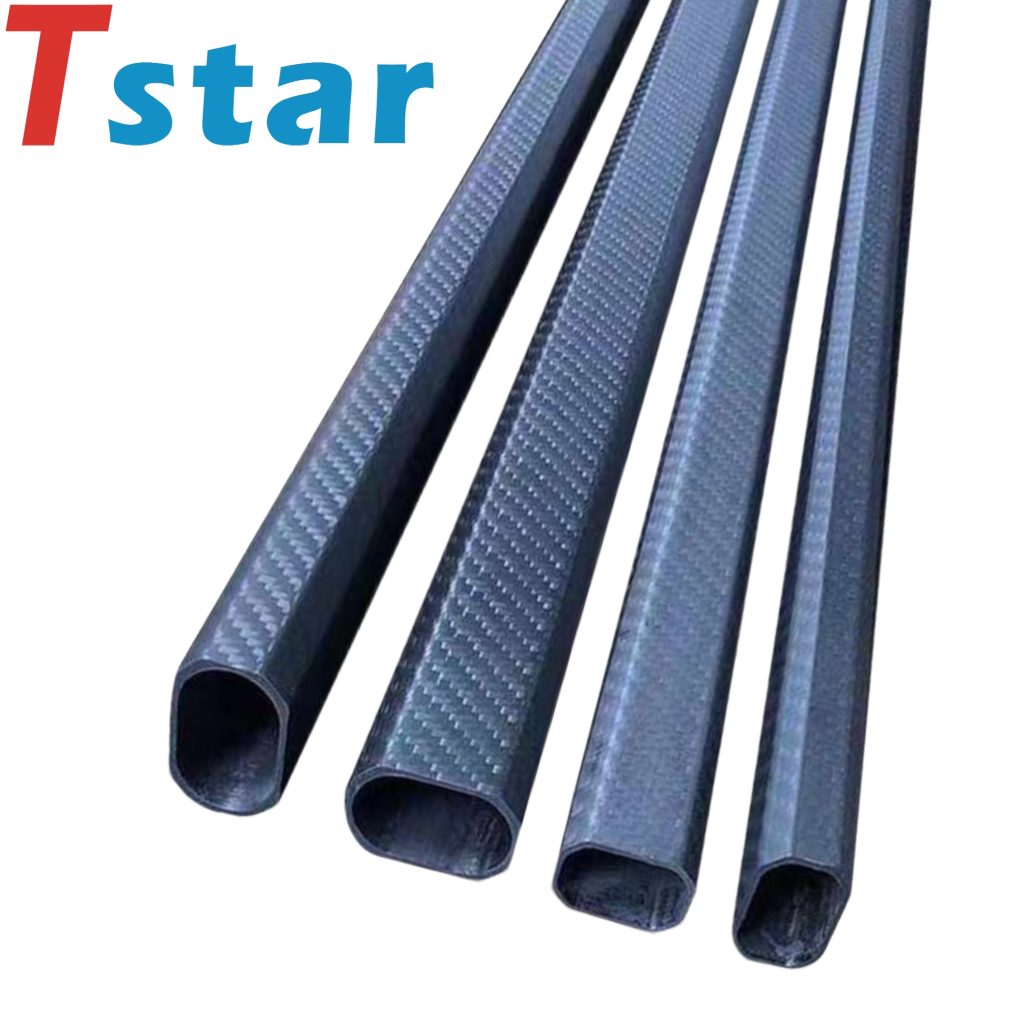
The carbon fiber octagonal tube is a high-performance composite tubular product featuring a unique eight-sided cross-section design. Combining the exceptional properties of carbon fiber with geometric structural advantages, it is widely used in aerospace, drones, robotics, sports equipment, high-end bicycles, and automotive industries, providing an optimal solution for applications requiring lightweight, high strength, and rigidity.
Material & Manufacturing
Made from high-modulus or high-strength carbon fiber tows (e.g., T700, T800, or T1000 grade) reinforced with epoxy or other advanced resin matrices, the octagonal tube is produced through precision filament winding, pultrusion, or compression molding. The octagonal geometry enhances bending and torsional resistance while optimizing weight distribution, offering superior structural efficiency compared to traditional round or square carbon fiber tubes.
Key Features
Ultra-High Strength & Lightweight: The carbon fiber strength-to-weight ratio in the Carbon fiber octagonal tube exceeds that of steel and aluminum, enabling the tube to withstand extreme tensile, compressive, and bending loads with minimal weight.
Outstanding Impact Resistance: The carbon fiber octagonal tube is a composite structure that can effectively absorb energy and resist fracture under dynamic loads.
Corrosion & Fatigue Resistance: The carbon fiber octagonal tube is unaffected by moisture, chemicals and UV exposure, ensuring long-term durability without rusting or degradation even under cyclic stress.
Low Thermal Expansion: Carbon fiber octagonal tubes have excellent dimensional stability in environments with temperature changes, making them ideal for precision instruments and aerospace components.
Customizable Design: Carbon fiber octagonal tubes are available with adjustable wall thickness, diameter, fiber orientation, and surface finish (matte, glossy, or 3K twill weave).
Applications
Aerospace: Drone arms, satellite mounts, reducing weight while enhancing fuel efficiency.
Sports Equipment: Golf shafts, bicycle frames, fishing rods, improving performance and longevity.
Industrial Machinery: Robotic arms, automation frames, lowering inertia for faster response.
Automotive: Roll cages, chassis reinforcements, balancing safety and weight reduction.
Technical Specifications (Example)
Density: 1.5-1.6 g/cm³
Tensile Strength: ≥1500 MPa
Elastic Modulus: ≥120 GPa
Operating Temperature: -50°C to +150°C
The carbon fiber octagonal tube embodies cutting-edge engineering material technology, serving as the top choice for performance-driven industries. Each unit undergoes rigorous quality control compliant with international standards (ASTM, ISO), and we offer tailored solutions to meet diverse requirements.
| Specification | Value |
|---|---|
| Material | High-strength carbon fiber (T700/T800 grade) |
| Weight | Ultra-lightweight (~200-300g/m, depending on size) |
| Color | Standard black (customizable: matte, glossy, 3K twill weave) |
| Cross-Section | Regular octagon (8-sided tube) |
| Length | Customizable (standard: 500mm, 1000mm, 1500mm) |
| Outer Diameter (Flats to Flats) | 20mm/25mm/30mm (other sizes available) |
| Wall Thickness | 1.0mm/1.5mm/2.0mm (options) |
| Load Capacity | Static load ≥50kg (varies by size & wall thickness) |
| Flexural Strength | ≥800 MPa |
| Elastic Modulus | ≥120 GPa |
| Temperature Range | -50°C to +150°C |
| Environmental Resistance | Waterproof, oil-resistant, corrosion-proof, UV-resistant |
| Surface Finish | High-precision polishing, optional scratch-resistant coating |
| Applications | Drone frames, robotic arms, high-end bicycle frames, racing components, aerospace supports, sports equipment, etc. |
Note: The values listed in the table are approximate and may vary depending on the specific product model and manufacturer. It is recommended to consult the product datasheet for accurate and detailed specifications.
Industry Trends of Carbon fiber octagonal tube
1. Growing Market Demand
Carbon fiber octagonal tubes are increasingly adopted across industries due to their high strength-to-weight ratio, corrosion resistance, and durability, including:
Aerospace: Drones and satellite mounts drive lightweight demands.
EVs: Battery frames and structural components to enhance energy efficiency.
Sports Equipment: High-end bicycles, golf clubs seeking performance upgrades.
Industrial Robotics: Arms require low inertia and high rigidity.
2. Technological Innovations
Cost-Effective Production: The carbon fiber octagonal tube uses automated layup and fast-curing resin to reduce manufacturing costs.
Multifunctional Composites: The carbon fiber octagonal tube uses carbon fiber + nano materials to improve conductivity / impact resistance.
3D-Printed Carbon Fiber: The carbon fiber octagonal tube is manufactured using additive manufacturing technology to create complex geometries with minimal waste.
3. Sustainability Focus
Recyclable Carbon Fiber: Carbon fiber octagonal tube Compared with traditional thermosetting composite materials, thermoplastic resin-based carbon fiber has better recyclability.
Bio-Based Resins: The carbon fiber octagonal tube uses plant-derived epoxy resin to reduce the carbon footprint.
4. Regional Market Dynamics
China:Government policies have boosted the domestic production of carbon fiber octagonal tubes.
Europe/US: High-end applications (F1, aviation) dominate, with a focus on customizing carbon fiber octagonal tubes.
Southeast Asia: Manufacturing shifts increase demand for industrial-grade CF.
5. Challenges & Opportunities
Challenges: The raw material price of carbon fiber octagonal tube fluctuates and the processing barrier is high.
Opportunities: Emerging sectors (hydrogen storage, deep-sea equipment) offer growth potential.
Future Outlook
- 2025-2030: With the development of new energy and automation equipment, the carbon fiber octagonal tube market is expected to expand at a compound annual growth rate of 8-10%.
- Long-term trend: Green manufacturing and smart materials (such as self-healing fabrics) will popularize industry standards.
Application of Carbon fiber octagonal tube
1. Aerospace Applications
With exceptional strength-to-weight ratio and lightweight properties, carbon fiber octagonal tubes are widely used in:
Drone (UAV) Frames: Reduce weight for longer flight time and improve wind resistance.
Satellite Mounts & Antenna Structures: The carbon fiber octagonal tube maintains stability under extreme space conditions (radiation, thermal cycling).
Aircraft Interiors: Seat frames, overhead bin supports to cut fuel consumption.
2. Automotive & Transportation
EV Structural Components: Carbon fiber octagonal tubes can be made into battery housings and chassis reinforcements to ensure safety and reduce weight.
Racing & High-Performance Vehicles:Carbon fiber octagonal tubes can also be made into roll cages and suspension links to improve rigidity and collision resistance.
Rail Transit: Carbon fiber octagonal tubes can also be made into lightweight internal supports for trains/subways.
3. High-End Sports Equipment
Bicycle Frames: Carbon fiber octagonal tubes can be made into road/mountain bike frames to increase stiffness and shock absorption.
Golf Clubs & Fishing Rods: Carbon fiber octagonal tube enhances swing stability and sensitivity.
Rowing Oars & Ski Poles: Carbon fiber octagonal tubes are strong and lightweight for optimal performance.
4. Industrial & Robotics
Robotic Arms: Carbon fiber octagonal tube reduces inertia for increased precision and speed.
Machinery Frames: Carbon fiber octagonal tubes can also be used in textile machinery and 3D printer structures to minimize vibration.
Measurement Equipment: Laser tracker mounts, optical benches for stability.
5. Defense & Security
Military Gear: Carbon fiber octagonal tubes can also be made into tactical backpack frames and light weapon parts.
Unmanned Vehicles: Carbon fiber octagonal tubes can also make reconnaissance drones/UGVs maneuverable and stealthy.
Ballistic Shield Supports: Carbon fiber octagonal tube based on lightweight composite material protection.
6. Renewable Energy & Specialized Fields
Wind Turbines: Internal blade supports to reduce fatigue.
Hydrogen Storage: High-pressure tank frames for fuel cell vehicles.
Deep-Sea Exploration: ROV structures resistant to seawater corrosion.

Advantages of Carbon fiber octagonal tube
1. Outstanding Mechanical Properties:
Ultra-high strength: Tensile strength exceeds 1500MPa (5x steel)
Superior stiffness: Elastic modulus >120GPa with excellent deformation resistance
Exceptional fatigue resistance: Withstands millions of load cycles
High impact resistance: Outstanding energy absorption capacity
2. Remarkable Lightweight Benefits:
Density only 1.5-1.6g/cm³ (30% lighter than aluminum, 70% than steel)
Weight just 1/5-1/3 of metals at equivalent strength
Significantly reduces structural weight and improves energy efficiency
3. Excellent Environmental Resistance:
Corrosion-proof: Immune to moisture, acids and alkalis
Superior weatherability: UV stabilizers prevent outdoor degradation
Wide temperature range: Stable performance from -50℃ to 150℃
Near-zero thermal expansion: Exceptional dimensional stability
4. Unique Structural Advantages
Octagonal cross-section enhances bending/torsional resistance
Multi-plane contact surfaces facilitate secure connections
High surface flatness ideal for secondary processing
Customizable fiber orientation for optimized performance
5. Superior Economic Value
Service life up to 15-20 years with minimal maintenance
Better lifecycle cost than metals due to superior performance
Repairable: Localized damage can be effectively repaired
6.Additional Benefits
- Electromagnetic discharge: Available in conductive/insulating versions
- Vibration damping: Better vibration damping than metal
- Aesthetics: Available in a variety of surface treatments (glossy/matte/woven)
- Environmental protection: Some models use recyclable materials


7. Military-Grade Structural Integrity:
- Utilizes aerospace-grade T800/T1000 carbon fiber
Compressive strength exceeds 2000MPa
Patented octagonal stress distribution
Complies with MIL-STD-810G military standard
8. Intelligent Thermal Management:
Axial thermal conductivity up to 200W/m·K
Anisotropic thermal expansion control
Optional integrated temperature-sensing fibers
Suitable for extreme environments (-196℃~300℃)
9. Modular Connection System:
Proprietary quick-release interfaces
360° multi-angle assembly capability
Pre-embedded conductive channels
Tool-free disassembly and reconfiguration
Comparison between carbon fiber octagonal tube and ordinary steel
1. Material Properties Comparison
| Parameter | Carbon Fiber Octagonal Tube | Ordinary Steel |
|---|---|---|
| Density | 1.5-1.6g/cm³ | 7.85g/cm³ |
| Tensile Strength | 1500-2500MPa | 300-600MPa |
| Elastic Modulus | 120-200GPa | 200-210GPa |
| Specific Strength | 1000MPa/(g/cm³) | 76MPa/(g/cm³) |
| CTE | -0.5~+0.5×10⁻⁶/℃ | 11.7×10⁻⁶/℃ |
2. Performance Advantages
Lightweight: 80% weight reduction at equivalent load capacity
Corrosion Resistance: Immune to chemical attack vs steel’s coating requirement
Fatigue Life: 10⁷ load cycles vs steel’s 10⁵ cycles
Temperature Stability: Stable from -50~150℃ vs steel’s low-temperature brittleness
3. Manufacturing & Application
Forming Process: Molding/filament winding vs welding/machining
Joining Methods: Special adhesives/mechanical fasteners vs welding
Repairability: Requires professional repair vs field welding
Design Flexibility: Customizable fiber orientation vs machining limitations
4. Economic Considerations
Initial Cost: 8-15x more expensive than steel
Service Life: 20 years vs steel’s 5-8 years
Maintenance: Nearly maintenance-free vs regular anti-corrosion treatment
Transport/Installation: 60% lower handling costs
5. Typical Applications
Carbon Fiber Preferred: Aerospace, racing, premium sports equipment
Steel Preferred: Construction, heavy machinery, low-cost infrastructure
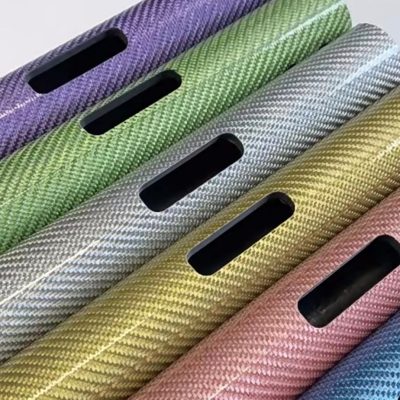
Customizable color of carbon fiber octagonal tube
We can match any color based on standard color codes or provided samples.
![{"data":{"pictureId":"3dd674d890034f619996ad87cd67ed1c","appversion":"12.7.0","stickerId":"","filterId":"","infoStickerId":"","imageEffectId":"","playId":"","activityName":"","os":"android","product":"retouch","originAppId":"2515","exportType":"","editType":"","alias":"","enterFrom":"enter_launch","capability_key":["edit"],"capability_extra_v2":{"edit":[{"panel":"composition"}]},"effect_type":"tool","effect_id":"edit"},"source_type":"douyin_beauty_me"}](https://www.cfrp-tstar.com/wp-content/uploads/elementor/thumbs/15-1-r9gc6t3ekc713quvewcx9cj17ri7q60kms541yjqn4.jpg "15")
| Category | Options | Technical Specifications |
|---|---|---|
| Basic Specs | ||
| Outer Diameter | 20mm/25mm/30mm/40mm/50mm(Custom sizes available) | Tolerance: ±0.1mm(Aerospace grade ±0.05mm) |
| Wall Thickness | 0.8mm/1.0mm/1.2mm/1.5mm/2.0mm/2.5mm | Multi-layer layup(3K/6K/12K) |
| Length | 500-3000mm(Continuous tubes up to 6m) | End treatment(Plain/Beveled/Threaded) |
| Material | ||
| Fiber Grade | T300/T700/T800/T1000/M40J/M55J | Tensile modulus: 230-540GPa |
| Resin System | Standard Epoxy/High-temp Epoxy/Bismaleimide/Thermoplastic | Curing temp: 80℃-180℃ |
| Ply Orientation | 0°/±15°/±30°/±45°/90°(Hybrid layup available) | Automated fiber placement controlled |
| Enhancements | ||
| Conductivity | Insulative/Conductive(Surface resistivity 10³-10⁶Ω/sq) | With CNT or metal mesh |
| Impact Resistance | Standard/Enhanced(KEVLAR hybrid) | Drop-weight test ≥50J |
| Flame Rating | UL94 V-0/V-1/HB(Ceramic coating optional) | LOI ≥28 |
| Surface | ||
| Texture | Plain/Twill/Unidirectional/3K weave/Matte/Glossy | Surface roughness Ra0.2-3.2μm |
| Coating | Wear-resistant/UV-resistant/Conductive/Color painting | Thickness 20-100μm (Laser marking available) |
| Embedded Parts | Threaded inserts/Quick-release connectors/Contact pins | Positioning accuracy ±0.2mm |
| Special | ||
| Smart Features | Fiber optic sensing/Strain monitoring/Temperature sensing | Up to 16 monitoring points |
| Thermal | Conductive(15W/mK axial)/Insulative(0.5W/mK) | PCM filling optional |
| EMI | Shielding(60-100dB)/Radome grade | Frequency range: 1-18GHz |
Our Advantages

Complete set of tooling
Our carbon fiber products are manufactured using a variety of molds to ensure precision and consistency in the final product. We have multiple sets of molds designed to accommodate different shapes, sizes, and specifications of carbon fiber components.
High production capacity
Our carbon fiber products are manufactured with high production capacity, ensuring efficient and cost-effective mass production. We have invested in advanced equipment and technology to streamline the production process and maximize output.


High product precision
Our carbon fiber components are designed and engineered to meet the exacting requirements of various industries and applications. We utilize computer-aided design (CAD) and computer-aided manufacturing (CAM) technologies to ensure precise measurements and cuts during the production process.
Catering to various customized processing needs
Our carbon fiber products are versatile and can cater to a wide range of customized processing needs. Whether it is for aerospace, automotive, sports equipment, or any other industry, our carbon fiber can be tailored to meet specific requirements.

FAQ
Q1: What are the structural advantages over traditional round tubes?
A1: Three key benefits:
40%+ higher torsional resistance from stress-distributing octagonal geometry
Flat contact surfaces enable tool-free secure mounting
Enhanced radial stiffness prevents deformation under load
Case study: Drone arms show 35% better wind resistance
Q2: How to evaluate layup quality?
A2: Inspection methods:
Ultrasonic testing (detects delamination/voids @0.2mm resolution)
Microscopic cross-section analysis (fiber angle tolerance <3°)
IR thermography (identifies curing inconsistencies)
Pro tip: Require ply schedule and NDT reports for each batch
Q3: Precautions for high-temperature applications?
A3: Critical considerations:
Resin selection: Standard epoxy limited to 150℃, requires BMI resin for 200℃
CTE management: Must compensate for axial/radial expansion differences
Connectors: Avoid thermal stress concentration from metal fittings
Data: M55J+BMI retains >85% strength at 250℃
Q4: Effective surface treatment methods?
A4: Recommended solutions:
Plasma treatment: 5x surface energy increase, 300% stronger bonding
Nano-coating: 120° contact angle for superior anti-fouling
Laser texturing: 20-50μm dimple arrays enhance mechanical interlock
Cost analysis: Plasma treatment offers best ROI (+15% cost)
Q5: Limitations for custom sizes?
A5: Key constraints:
Tooling: Fiber placement becomes challenging below 15mm diameter
Process window: Resin infusion yield drops to 70% for walls <0.5mm
Equipment: Lengths >6m require special curing ovens
Solution: Modular connection designs for extended lengths
Q6: How to calculate lifecycle cost?
A6: Four cost components:
Initial: Material, forming, finishing (40% share)
Maintenance: Inspection/repair (80% lower vs steel)
Replacement: Service life (15 years for aerospace grade)
Disposal: Recycling value (>90% pyrolysis recovery)


