

Product Description
The carbon fiber triangle tube is a high-performance composite pipe made of premium carbon fiber and resin matrix through advanced manufacturing processes. Its unique triangular cross-section combines lightweight properties with exceptional rigidity, making it ideal for aerospace, motorsports, high-end bicycles, drones, and industrial machinery.
Key Features:
Ultra-Light & High Strength: With a density lower than steel and 30%-50% lighter than aluminum, it delivers superior tensile and compressive strength.
Triangular Design: The geometry enhances bending and torsional resistance, optimizing load distribution for multidirectional forces.
Corrosion-Resistant: Immune to moisture, chemicals, and UV exposure, ensuring durability and low maintenance compared to metal tubes.
Customizable: Available in tailored dimensions, wall thicknesses, surface finishes (plain/twill weave), and resin types for diverse applications.
| Specifications | Value |
|---|---|
| Material | High-quality carbon fiber |
| Weight | Lightweight (approx. 250g) |
| Color | Black or customizable |
| Length | Various options available (e.g. 15cm, 20cm, 25cm) |
| Diameter | Approx. 3cm |
| Load Capacity | Suitable for weights up to 15kg |
| Environmental Resistance | Resistant to water, oil, and corrosion |
| Applications | Outdoor sports, recreational activities, agriculture, industrial use |
Note: The values listed in the table are approximate and may vary depending on the specific product model and manufacturer. It is recommended to consult the product datasheet for accurate and detailed specifications.
Carbon fiber triangle tube industry trend
1. Growing Market Demand
Carbon fiber triangle tube are increasingly sought after in aerospace, automotive, sports equipment, drones, and high-end manufacturing due to their lightweight, high strength, and corrosion resistance. The rapid growth of EVs, e-bikes, and drones has further boosted demand for high-performance structural components.
2. Technological Advancements
Material Enhancements: Adoption of higher-modulus carbon fibers (e.g., T1000, M40X) improves performance.
Manufacturing Innovations: Automated fiber placement (AFP) and 3D printing reduce costs and increase efficiency.
Hybrid Designs: Integration with honeycomb structures or nano-reinforcements enhances rigidity and shock absorption.
3. Sustainability & Eco-Friendly Trends
Recyclable Carbon Fiber (rCF): Stricter environmental regulations drive R&D in recyclable carbon fiber.
Bio-Based Resins: Plant-derived epoxy resins reduce reliance on petrochemicals.
4. Expanding Applications
EVs & Automotive: Carbon fiber triangle tube can be used for battery frames and body structures to reduce weight and improve battery life.
Drones & Robotics: Lightweight structures improve flight endurance and robotic arm payloads.
Construction & Infrastructure:Carbon fiber triangle tube can be used for bridge reinforcement and earthquake-resistant structures to replace traditional steel
5. Challenges & Opportunities
High Costs: Raw materials and processing expenses limit mass adoption.
Standardization: Lack of unified industry standards hinders market expansion.
Competition: High-performance plastics (e.g., PEEK) and metal matrix composites (MMCs) pose alternatives.
The carbon fiber triangle tube industry holds significant potential, with tech innovation and sustainability driving adoption in high-end sectors, though cost control and standardization remain critical challenges.


Carbon fiber triangle tube application
Aerospace Applications:
Aircraft structures: Carbon fiber triangle tubes can be used for fuselage frames and bulkhead supports, reducing weight while maintaining strength
Satellite components: Carbon fiber triangular tubes can also be used as satellite brackets and antenna brackets, with excellent dimensional stability
Drones: Carbon fiber triangular tubes can also be used in boom structures to significantly increase flight time and payload capacity
Automotive Industry:
Racing parts: Carbon fiber triangles are used as roll cages and chassis reinforcements, providing excellent impact resistance
Electric vehicle applications: Carbon fiber triangle tubes can also form battery pack frames and body structures to extend driving range
High-end sports cars: Carbon fiber triangle tubes can also be made into safety structures such as door anti-collision beams
Sports Equipment:
Bicycles:Carbon fiber triangle tubes allow the frame and fork components to achieve extremely lightweight performance
Golf clubs: Carbon fiber triangle tube can provide better feel and control for the shaft material
Skiing gear: Carbon fiber triangle tubes combine lightness and strength for ski poles and binding components


Industrial Applications:
Robotic arms: Carbon fiber triangle tubes serve as the main structure to improve movement precision and response
Inspection equipment: CMM machine frames ensuring measurement stability
Automation systems: Carbon fiber triangle tubes provide precision instrument support to minimize vibration effects
Construction Field:
Bridge reinforcement: Carbon fiber triangle tubes can replace traditional steel for bridge repair
Seismic structures: Earthquake-resistant building supports
Temporary structures: Exhibition halls and stadium roofs with large spans
Medical Devices:
Medical imaging: CT/MRI equipment support frames
Rehabilitation devices: Lightweight prosthetics and orthotics
Surgical robots: Main armature frameworks
Special Application Cases:
- F1 racing steering wheel frame: carbon fiber triangle tubes provide ultra-high rigidity while maintaining extremely light weight
- Spacecraft solar panel bracket: carbon fiber triangle tubes can also maintain stability in the extreme environment of space
- Deep-sea probe frame: excellent high pressure and corrosion resistance
Future Application Prospects:
Urban air mobility vehicles: Critical structural components for eVTOL aircraft
Next-gen robotics: Enabling more agile and precise robotic movements
Space exploration: Lightweight structures for lunar/Mars habitats
With their unique performance advantages, carbon fiber triangular tubes continue to expand into new application fields. As costs decrease and manufacturing processes improve, their range of applications is expected to grow even further.
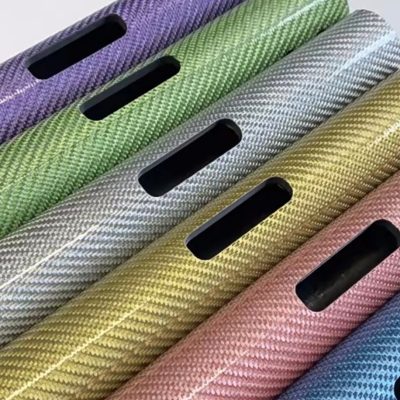
Color customization:
We can match any color according to standard color codes or provided samples

Advantages of carbon fiber triangle tube
Outstanding Strength-to-Weight Ratio
5 times stronger than steel while being 30-50% lighter than aluminum
Significant weight reduction without compromising structural integrity
Excellent Stiffness Performance
Triangular geometry provides superior bending and torsional resistance
Anisotropic design allows optimization for specific load directions
Superior Fatigue Resistance
Service life 3-5 times longer than metal materials
Maintains stable performance under cyclic loading
Exceptional Environmental Resistance
Corrosion-proof: Resistant to moisture, salt spray and chemicals
Weather resistance: Better UV stability than most engineering plastics
Wide operating temperature range (-50°C to 150°C)
High Design Flexibility
Customizable ply angles and fiber orientations
Capable of complex cross-section integrated molding
Multiple surface treatment options (glossy, matte, textured, etc.)
Excellent Vibration Damping
Natural damping capacity 5-10 times that of aluminum
Effectively suppresses resonance and improves system stability
Good Electromagnetic Compatibility
Non-conductive properties prevent EMI
Ideal for precision electronic equipment supports
Low Thermal Expansion
Exceptional dimensional stability (near-zero CTE)
Suitable for precision instruments and environments with large temperature variations
Repairability
Localized damage can be restored with professional repair techniques
Lower maintenance costs compared to metal structures
Aesthetic Appeal
Distinctive carbon fiber weave pattern showcases high-tech appearance
Multiple decorative surface treatment options available
Comprehensive Benefits:
Lifecycle cost advantage: Higher initial cost offset by lower long-term maintenance
Energy saving: Lightweight contributes to energy efficiency in transportation and use
Design freedom: Breaks through forming limitations of traditional metal materials
Comparison between ordinary steel and carbon fiber triangle tubes
| Property | Carbon Fiber Triangular Tubes | Ordinary Steel (Mild) |
|---|---|---|
| Density | 1.5-1.6 g/cm³ | 7.8 g/cm³ |
| Tensile Strength | 3000-5000 MPa (T700-T800 grade) | 300-500 MPa (Q235 steel) |
| Specific Strength | 2000-3300 kN·m/kg | 38-64 kN·m/kg |
| Elastic Modulus | 200-300 GPa | 200-210 GPa |
| Thermal Expansion | 0.5-2.0×10⁻⁶/°C | 11-12×10⁻⁶/°C |
| Corrosion Resistance | Excellent (inherently corrosion-proof) | Poor (requires coatings) |
| Fatigue Life | >10⁷ cycles | 10⁵-10⁶ cycles |
| Manufacturing Process | Molding/Filament Winding | Rolling/Welding |
| Connection Methods | Adhesive bonding/Embedded inserts | Welding/Bolting |
| Material Cost | High (~5-10× steel) | Low |
| Repairability | Requires specialized repair | Easily repairable |
| Electrical Conductivity | Non-conductive | Conductive |
| Thermal Conductivity | 5-10 W/m·K (low) | 50-60 W/m·K (high) |
| Vibration Damping | Excellent (5-10× better than steel) | Poor |
| Design Flexibility | High (complex shapes possible) | Limited |
| Typical Applications | Aerospace/Racing/Drones | Construction/Bridges/Machinery |
| Environmental Impact | High energy to produce but recyclable | Fully recyclable |
| Maximum Service Temp | 120-180°C (depends on resin) | 400-600°C |
| Impact Resistance | Good (but brittle failure mode) | Excellent (ductile) |
| Surface Finish | High-quality cosmetic appearance | Requires painting |
Key advantages of carbon fiber:
- 70-80% lighter than steel
- 5-10 times stronger to weight ratio
- Never corrodes in harsh environments
- Can integrate complex geometries
- Better fatigue performance
Key advantages of steel:
- Lower material cost
- Easier to weld and repair
- Better impact resistance
- Higher temperature resistance
- Compliant with established design specifications and standards
Custom details
| Parameter | Options/Availability | Notes |
|---|---|---|
| Fiber Grade | T300/T700/T800/M40J | Higher grades (T800+) available for aerospace applications |
| Resin System | Epoxy/BMI/Polyimide | BMI & Polyimide for high-temp (up to 300°C) environments |
| Fiber Architecture | Unidirectional/2D Weave/3D Braid | 3D braid enhances torsional strength |
| Surface Texture | Glossy/Matte/Textured | Custom weave patterns available (twill, satin, etc.) |
| Dimension | Standard Range | Tolerance | Custom Options |
|---|---|---|---|
| Side Length | 10-200mm | ±0.1mm | Non-equilateral triangles available |
| Tube Length | 100-6000mm | ±0.2mm/m | Continuous lengths up to 12m possible |
| Wall Thickness | 0.5-10mm | ±5% | Variable thickness designs |
| Corner Radius | 0.5-5mm | ±0.2mm | Sharp corners (0mm) by special request |
| Property | Standard Performance | Enhancement Options |
|---|---|---|
| Tensile Strength | 3500MPa (T700) | Up to 5500MPa with T800+/M40J fibers |
| Compressive Strength | 1200MPa | Increases 40% with foam core |
| Flexural Modulus | 120GPa | 150GPa+ with high-modulus fibers |
| Torsional Rigidity | 85% of round tube | Improves with 3D braided construction |
| Feature | Implementation Method | Performance Impact |
|---|---|---|
| Integrated Connectors | Molded-in metal inserts | 50kN+ pullout strength |
| Conductive Paths | Copper mesh integration | <1Ω surface resistivity |
| Thermal Management | Graphite coating | 50-100W/m·K in-plane conductivity |
| RF Transparency | Special resin formulation | >90% signal transmission at 10GHz |
| Certification | Testing Standard | Compliance Level |
|---|---|---|
| Dimensional Inspection | ISO 2768-1 | Fine grade |
| NDT Examination | ASTM E2581 | 100% ultrasonic testing |
| Mechanical Testing | ASTM D3039/D3410 | Batch testing with full documentation |
| Environmental Testing | MIL-STD-810G | Salt spray, thermal cycling, UV resistance |
| Aspect | Specification | Notes |
|---|---|---|
| Minimum Order Quantity | 5 pieces | Prototype service available |
| Lead Time | 3-6 weeks | Expedited 2-week service (+30% cost) |
| Tooling Requirements | Custom mandrels | 3D printed prototypes for design validation |
| Post-Processing | CNC trimming, drilling | Precision machining to ±0.05mm |
Note: All specifications subject to engineering review. Typical properties based on standard epoxy resin system with T700 fiber. Contact engineering team for application-specific recommendations.
Packaging and shipping
To ensure the product reaches our customers intact, we will apply impact-resistant cushioning material around vulnerable areas of the base board, providing protection during transit.
Our Advantages

Complete set of tooling
Our carbon fiber products are manufactured using a variety of molds to ensure precision and consistency in the final product. We have multiple sets of molds designed to accommodate different shapes, sizes, and specifications of carbon fiber components.
High production capacity
Our carbon fiber products are manufactured with high production capacity, ensuring efficient and cost-effective mass production. We have invested in advanced equipment and technology to streamline the production process and maximize output.


High product precision
Our carbon fiber components are designed and engineered to meet the exacting requirements of various industries and applications. We utilize computer-aided design (CAD) and computer-aided manufacturing (CAM) technologies to ensure precise measurements and cuts during the production process.
Catering to various customized processing needs
Our carbon fiber products are versatile and can cater to a wide range of customized processing needs. Whether it is for aerospace, automotive, sports equipment, or any other industry, our carbon fiber can be tailored to meet specific requirements.

FAQ
Q1: Why choose triangular over circular cross-section?
A1: Triangular design provides:
• Mechanical superiority: 40% higher bending stiffness and 25% better torsion resistance vs round tubes at equal weight;
• Connection ease: Flat surfaces enable stronger adhesive bonding/mechanical fastening;
• Space efficiency: Allows dense honeycomb-like packing for structural optimization;
• Aerodynamics: Reduces vortex shedding in airflow (critical for drone arms).
Q2: How to connect carbon fiber tubes with metal parts?
A2: Three proven solutions:
Adhesive bonding: Epoxy structural adhesive (30MPa+ shear strength) with sandblasted surfaces;
Hybrid joining: Adhesive + titanium fasteners (insulating washers prevent galvanic corrosion);
Embedded inserts: Pre-molded metal sockets (for mass production) with >50kN pull-out strength.
Q3: Performance under extreme temperatures?
A3: Depends on resin matrix:
• Standard epoxy: -50℃~120℃ (80% strength retention at peak temperature);
• High-temp resin: -196℃~180℃ (suitable for cryogenic to engine bay environments);
• Unique trait: Below -30℃, thermal conductivity drops to 0.5W/m·K (superior anti-thermal bridging vs metals).
Q4: Maintenance guidelines?
A4: Key practices:
Cleaning: pH-neutral detergents only (acetone damages resin);
Inspection: Tap-test every 6 months (hollow sound indicates delamination);
UV protection: Required for outdoor applications;
Repair: Damage <5mm repairable with carbon patches + vacuum infusion.
Q5: How to verify product quality?
A5: Three essential tests:
Ultrasonic C-scan: Checks internal porosity (aerospace grade requires <1%);
3-point bending test: Verifies <5% deviation from theoretical flexural strength;
Accelerated aging: 2000hrs salt spray + 3000 thermal cycles.


