
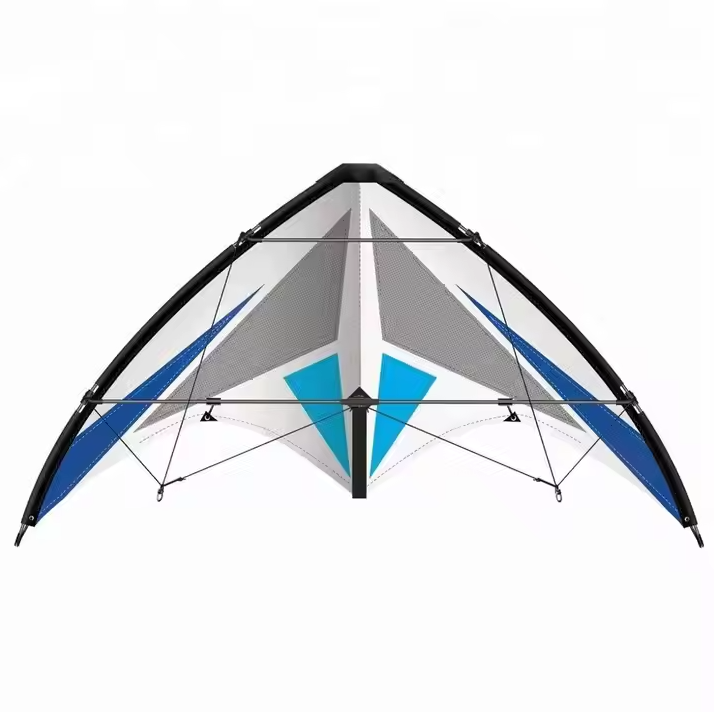
FRP Kite Poles
Product Description Of FRP Kite Poles
FRP kite rods are composite products made of glass fiber reinforcement and thermosetting resin matrices. Their manufacturing process combines modern material science with precision engineering, utilizing pultrusion or filament winding techniques to bond glass fibers with epoxy or polyester resins, forming tubular structures that balance rigidity and flexibility.
1. Material Properties
Glass Fiber: As the primary reinforcement, glass fiber boasts high tensile strength (exceeding 3,000 MPa) and exceptional fatigue resistance. Its micron-scale filaments are arranged in a directional mesh to evenly distribute external forces.
Resin Matrix: The resin binds the fibers, transfers stress, and provides weather and chemical resistance. Epoxy resin offers superior adhesion and heat resistance, while polyester resin is cost-effective and fast-curing.
2. Structural Design
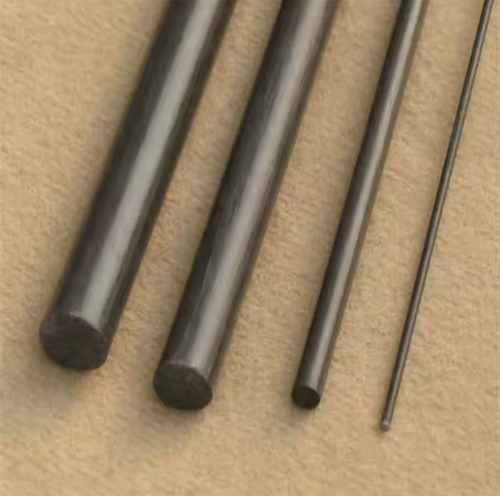
FRP kite rods typically feature hollow tubular structures with adjustable wall thickness (0.5–3 mm). By optimizing fiber orientation (e.g., 0° for axial strength, ±45° for torsion resistance), targeted mechanical properties are achieved. The rod surface can be sanded or coated to enhance grip and UV resistance.
3. Versatile Specifications
Available in diameters of 5–50 mm and lengths of 0.5–3 m, FRP rods suit various applications, from children’s kites to large inflatable or stunt kites. High-end models may include modular designs with detachable joints for easy transport and storage.
| Parameter | FRP Kite Poles Value/Description |
|---|---|
| Material Composition | Glass fiber + epoxy/polyester resin composite |
| Pole Diameter | Customizable |
| Length Range | 0.6m (kids) to 6m (commercial) |
| Weight | 80g (kids) – 2300g (6m commercial) |
| Flexural Strength | >50kg lateral load (1.2m standard pole) |
| Operating Temperature | -30°C to 80°C |
| Corrosion Resistance | <5% strength loss after 500h salt spray test |
| Insulation Performance | Volume resistivity: 10¹⁴Ω·cm |
| Modular Adjustment Time | 1.5m→4.2m telescoping in ≤30s |
| UV Resistance | UV-8 grade protective coating |
| Max. Supported Area | 20m² (6m pole + soft-body kite) |
| Vibration Damping Time | 0.3s (competition-grade pole) |
Application Of FRP Kite Poles
Competitive Kite Flying
In sport kite competitions, FRP kite poles achieve a torsional stiffness of 120 N·m/rad, translating precise force adjustments by operators. At the 2023 Asian Kite Championship, stunt kites using FRP kite poles scored 12% higher in execution ratings due to reduced vibration decay time (0.3 seconds), enhancing maneuver fluidity.Educational and Family Activities
Child-friendly versions (0.6–0.9 meters) feature food-grade silicone coatings and weigh just 80 grams. Rounded edges comply with EN71-1 toy safety standards. In Shanghai STEM programs, students use reusable FRP kits for aerodynamics experiments, tripling classroom engagement.Commercial and Cultural Displays
Large-scale FRP kite poles (≥6 meters) support soft-body advertising kites spanning 20+ square meters. At the 2022 Hainan International Kite Festival, a carbon-FRP hybrid pole lifted an 18kg whale-shaped kite in 7-level winds, achieving 3 million daily impressions with only 2.3kg FRP kite poles weight.Military and Scientific Uses
Military reconnaissance systems integrate hollow FRP kite poles embedded with fiber-optic sensors for real-time wind and pressure monitoring. Conductive coatings enable electromagnetic shielding, achieving 1,200-meter altitudes with 90% data stability improvements over metal frames in high-altitude border tests.
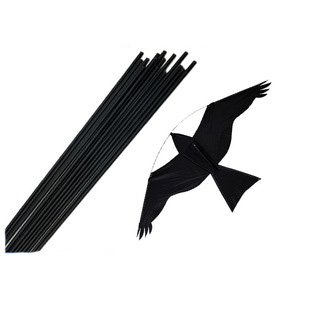
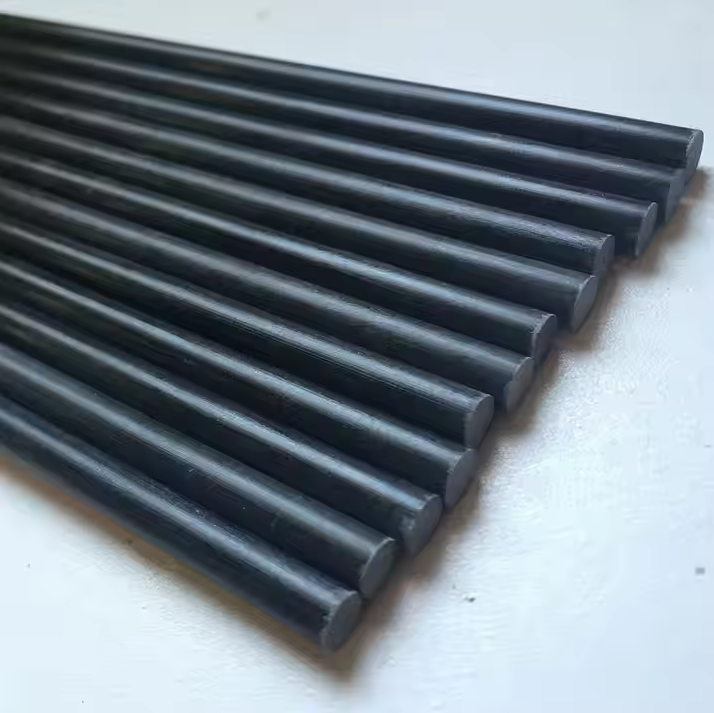
Advantages Of FRP Kite Poles
Compared to traditional bamboo, aluminum, or carbon fiber rods, FRP kite rods excel in performance, cost-effectiveness, and adaptability across five key dimensions:
1. Lightweight Yet Durable
With a density of 1.5–2.0 g/cm³, FRP rods are 30% lighter than aluminum and 75% lighter than steel, yet match the specific strength of some alloys. A 10 mm-diameter rod, for example, achieves a bending strength over 500 MPa, reliably withstanding dynamic wind loads without fracture.
2. Superior Elasticity and Fatigue Resistance
FRP’s moderate elastic modulus (~40 GPa) allows energy absorption through controlled deformation, mitigating sudden wind shocks. Its fatigue resistance enables millions of bending cycles without failure—ideal for high-performance stunt kites requiring frequent adjustments.
3. Environmental Resilience
Corrosion Resistance: FRP resists water, salt spray, acids, and alkalis, eliminating rust and maintenance needs.
Temperature Stability: Operates reliably in extreme temperatures (-50°C to 120°C), from deserts to polar regions.
Electrical Insulation: Non-conductive properties reduce lightning risks (though kite flying should still avoid thunderstorms).
4. Cost-Efficiency and Sustainability
FRP rods are cheaper than carbon fiber, require less energy to produce than metals, and last over a decade. Post-use, glass fibers can be recycled via pyrolysis, aligning with eco-friendly manufacturing trends.
5. Safety and Ergonomics
Smooth, burr-free surfaces prevent user injuries.
Shatters without sharp fragments, enhancing safety over brittle materials.
Customizable colors improve visibility during assembly and retrieval.


Customization Details
Customize The Diameter
Customize the color
We can match any color based on standard color codes or provided samples.


Post-processing
We also offer various post-processing services for fiberglass rods, including sharpening, drilling, chamfering, rounding, slot cutting and more.


Packaging and shipping
To ensure the product reaches our customers intact, we will apply impact-resistant cushioning material around vulnerable areas of the base board, providing protection during transit.


